




 Facebook
The beurre manié is prepared first.
Rub the butter cubes into the flour by hand, until all the flour has been combined.


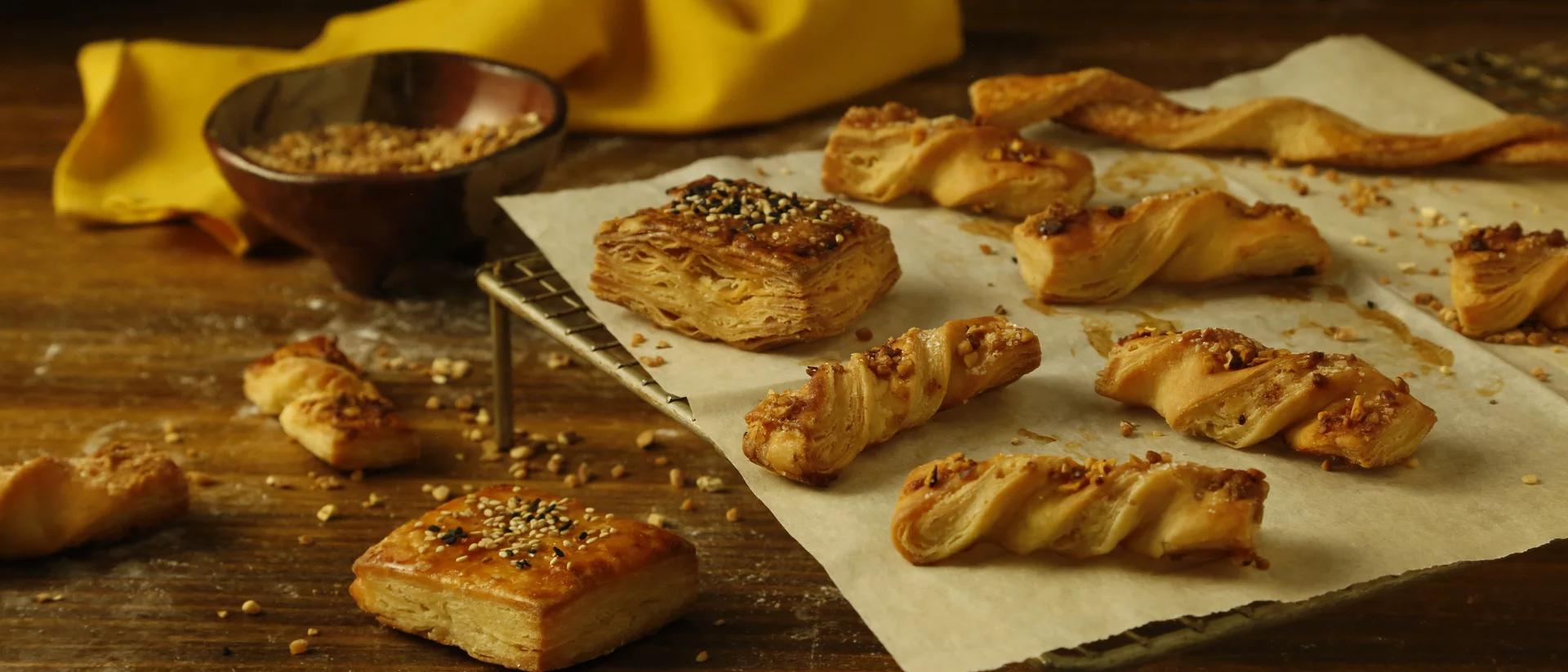
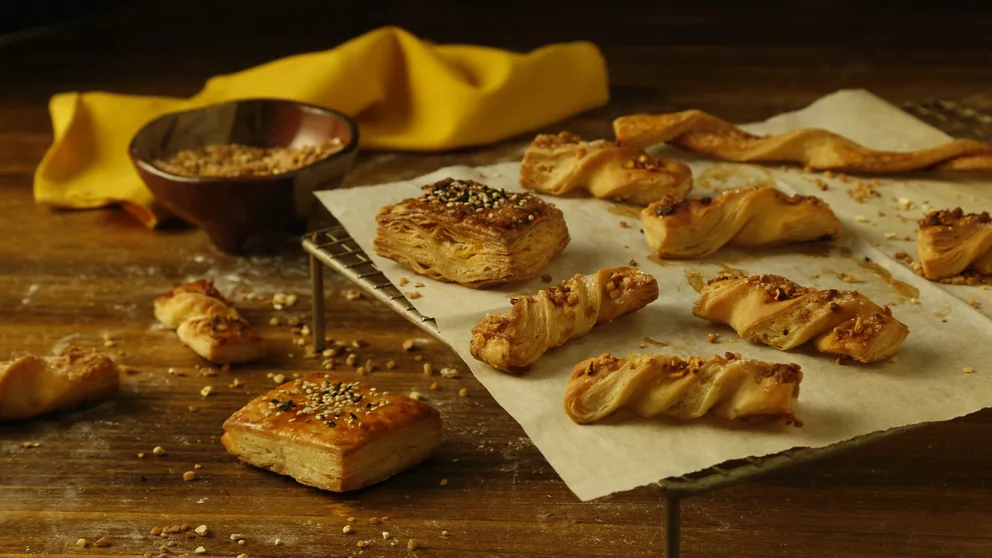
The first known recipe of modern puff pastry appears in Libro del arte de cozina, a Spanish recipe book published in 1607. But today the best recipe for gluten-free puff pastry can be found right here and all home bakers should have a tried and trusted flaky pastry recipe up their sleeve. It does require deft hands and a certain wizardry in the kitchen, but it is worth it for the light, buttery result. Once you’ve mastered it, there will be no pie, tart or parcel puff that you can’t serve!
The beurre manié is prepared first.
Rub the butter cubes into the flour by hand, until all the flour has been combined.
Roll the kneaded butter into a 10cm long sausage and press flat.
Wrap in cling film and cool in the fridge for at least 1 hour.
First quickly mix the liquid ingredients, then incorporate the rest of the ingredients.
Knead until they form an even dough.
Roll this into a rope and press flat.
Wrap in cling film and place in the fridge to chill until the butter mix is thoroughly cold.
After this resting phase, roll the dough out to form a square, approximately 8 to 10mm thick.
Next, roll out the butter mix into the same square shape and thickness as the dough.
Brush off any flour remaining on the dough after it has been rolled out and place the butter mix in the middle.
Now fold all sides of the dough towards the middle of the butter mix and gently press them down. Place the dough in the fridge for 30 minutes.
Folding– this procedure creates the flaky layers in the dough. There is a total of 4 folds (simple, double, simple and double). After each fold, place the dough in the fridge for 30 minutes.
Folding 1 – Simple Fold:
Roll the dough out lengthwise (not thinner than 8 mm) and fold it to a simple fold as follows.
Brush off any flour remaining on the dough and fold the top third of the rolled-out dough inwards and press gently.
Place the bottom third over the top third (like a letter) and press gently.
Wrap the dough in cling film and place in the fridge for 30 minutes.
Folding 2 – Double Fold:
Turn the dough 90° (it looks like a book about to open) and roll it out again lengthwise. If the dough is too narrow, it can also be rolled out a little wider, but it should never be thinner than 8mm. Brush off any flour remaining on the dough.
Fold in only 2 – 3 cm of one side and press down gently.
Place the other side with the end against it and press down gently.
Wrap the dough in cling film and place in the fridge for 30 minutes.
Folding 3 – repeat a simple fold (steps 9-12).
Folding 4 – repeat a double fold (steps 13-17).
Roll out the dough as needed (not thinner than 8 to 10 mm) and continue processing according to the recipe.
Bake in a preheated oven on fan setting at 210°C (220°C top/bottom) and with some steam. Baking time will depend on the size of the pastry. The colour of the pastry is a good indicator of when it is done.


Related recipes
Other interesting articles