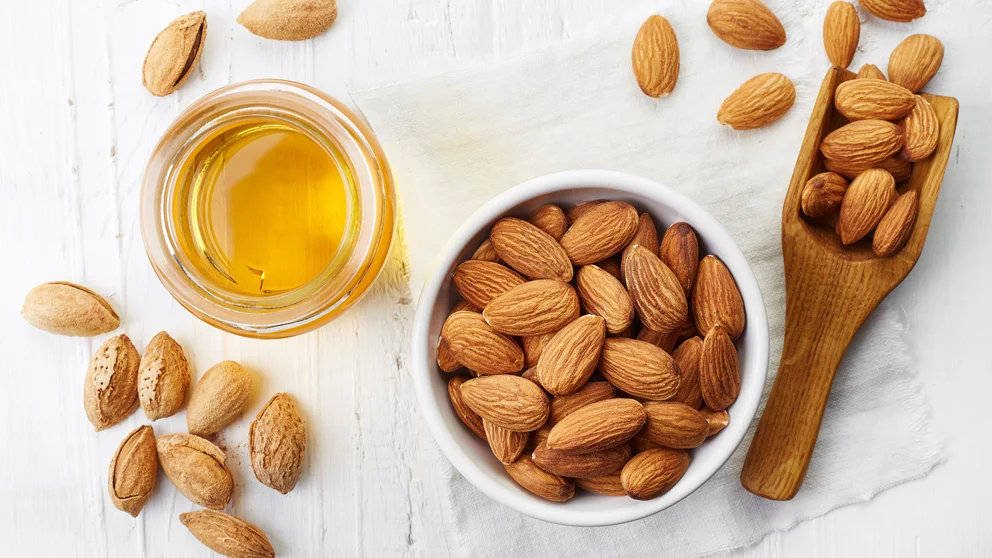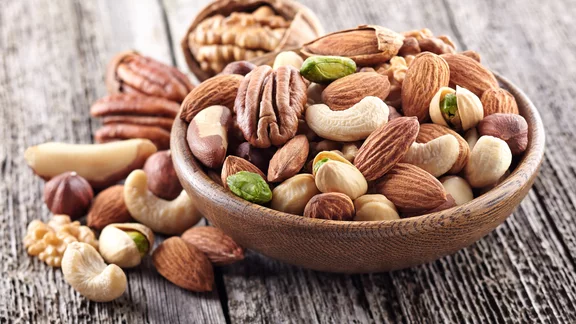



If almonds are raw or simply roasted, there is no reason for any gluten to be present. But take care if the nuts are flavoured or seasoned.

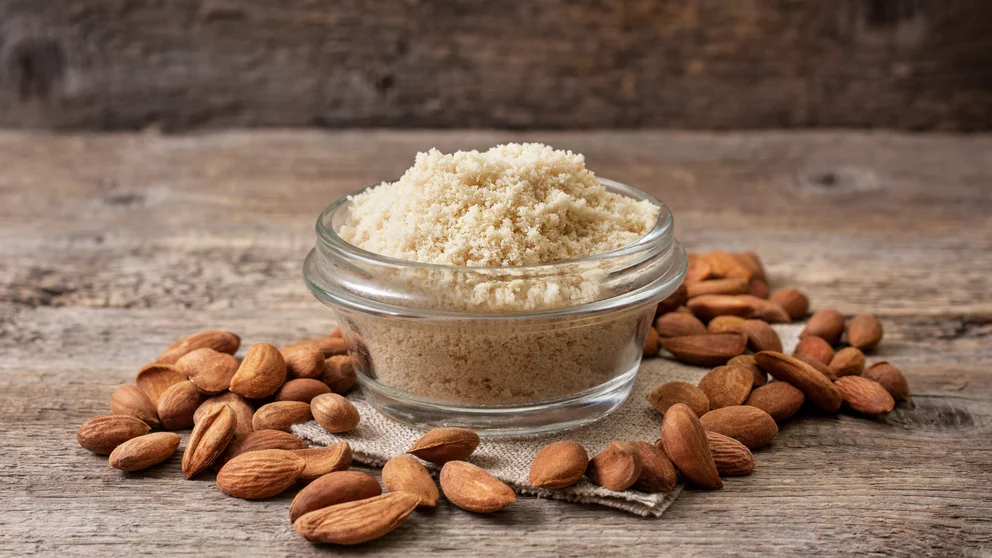
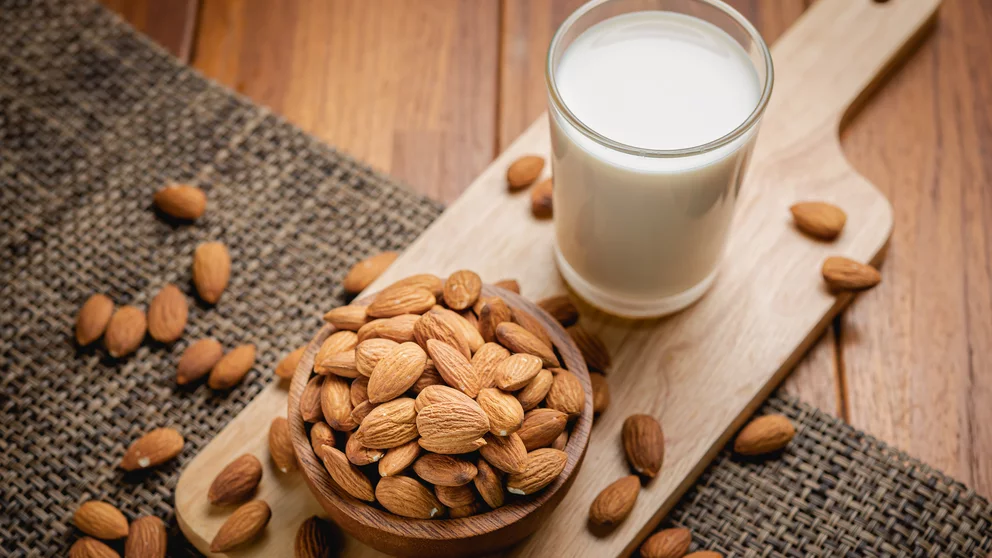
Slivered or flaked almonds should be naturally gluten free, too, if there are no other ingredients present – and the same goes for almond milk and almond flour, which is one of the most nutrient-rich gluten free flours you can find.
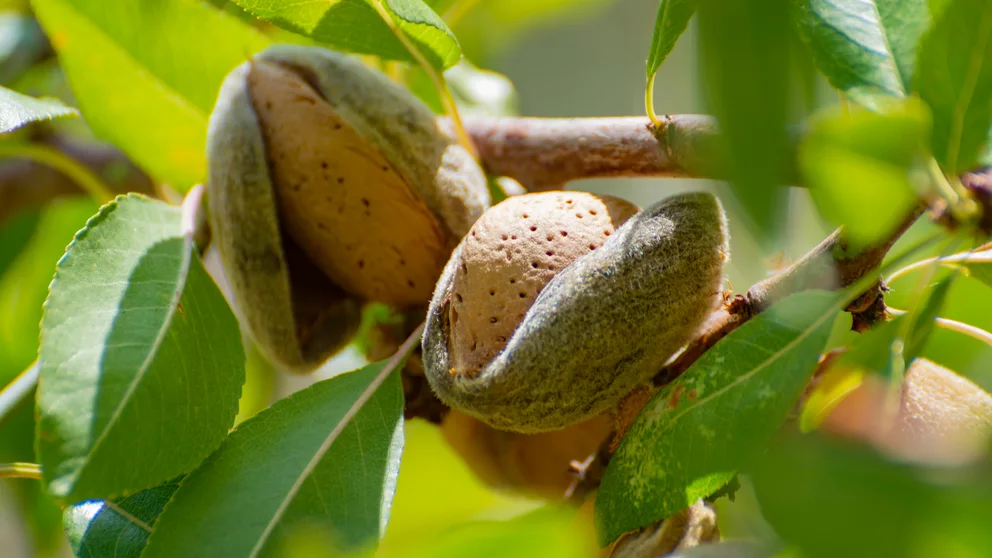

What are almonds?

Almonds are the seed inside the fruit of the almond tree, a species native to Iran and surrounding areas of the Middle East. These days, more than half of the world’s supply of almonds is grown in California.

Are almonds gluten free?

Like all nuts, almonds are naturally gluten free as they do not contain any gluten-containing grain.

Nutritional facts of almonds

Almonds are a highly nutritious nut. They are very high in fibre, calcium, vitamin E, riboflavin and niacin, and also contain magnesium and potassium. A 28-gram (or one ounce) serving (about 23 almonds) provides six grams of protein and four grams of fibre.

Almonds contain fat, but it is mostly healthy fat. In terms of carbohydrates and energy, almonds are a low-glycaemic index food, meaning that the carbs in almonds raise the glucose level in the blood slowly, which is good for diabetics or people with prediabetes.

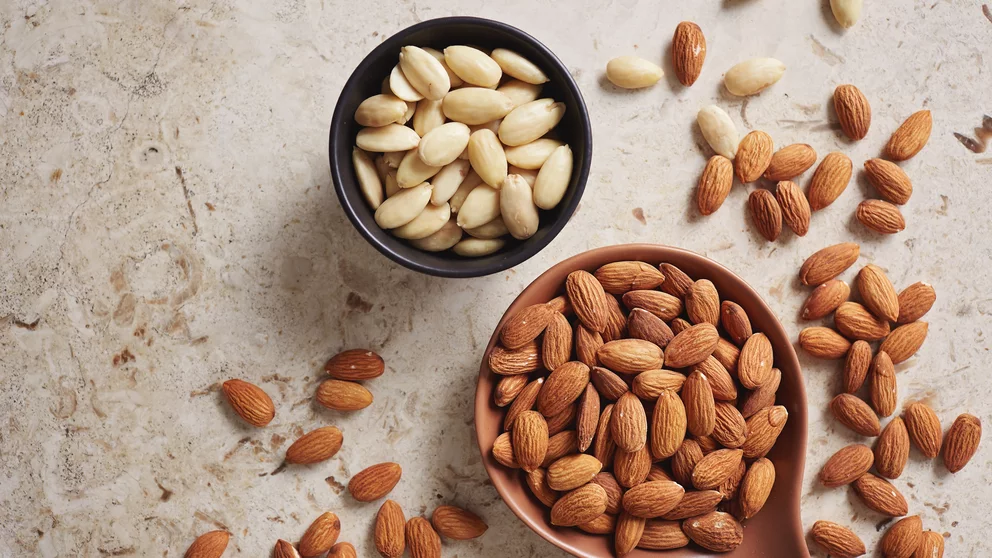
Research has shown that almonds are at their most nutritious and offer the most health benefits if eaten whole with their brown skin on, as opposed to almonds that have been blanched to remove the skin.

Carbs in almonds

Like all nuts, almonds are a high-calorie food; eating a small amount can satisfy hunger pangs. But almonds do not contain a lot of carbohydrates. A 28-gram (one ounce) serving contains six grams of total carbs, of which only half are what are known as net carbs that are rapidly absorbed into the bloodstream (sugars and starches). The rest are indigestible or slow-absorption carbs such as fibre or sugar alcohols.

Fat in almonds

Like many nuts, almonds have a high fat content at around 50%. However, approximately 80% of this is monounsaturated fat, which does not have the negative effect on the heart and blood pressure associated with saturated fats.

Health benefits of almonds

So are almonds good for you? Eating almonds has been related to health benefits, especially as a positive factor as part of protection against heart disease, hypertension, strokes and, possibly, diabetes. The long-term consumption of almonds and similar nuts is linked with lower body weight and a reduced risk of obesity, research has shown.

According to a 2017 study, eating the same amount of calories from almonds instead of from a muffin improves the body’s ability to clear cholesterol from the bloodstream in people of a healthy weight.

Whole almonds with their skins on appear to offer the greatest health benefits. The skin contains 20 antioxidant flavonoids, substances which may play a role in controlling cholesterol levels and countering inflammation.

Almonds contain nutrients that help maintain healthy skin and hair, including two B vitamins, riboflavin and niacin, as well as linoleic acid, a fatty acid that helps prevent dry skin. Almonds are a good source of Vitamin E, which protects our cells from damage.

Some people prefer to eat almonds that have been soaked to soften them. Soaking makes almonds easier to chew into tiny pieces for better absorption of nutrients and some studies have suggested that digestive enzymes may be able to break down these nutrients more effectively after soaking, although this conclusion has been questioned by other research.

What are the side effects of eating almonds?

Although almonds are a healthy food, there are some caveats to bear in mind. Like other nuts, almonds have a high fat content so eating large amounts can lead to weight gain.

Almonds also contain manganese, with the typical 28-gram serving providing a person with a quarter of the daily intake for this mineral. High quantities of manganese from eating much more than this amount and combining with other manganese-rich foods could trigger drug interactions. High levels of manganese in the blood can interfere with several kinds of medicine.

Some people are allergic to almonds.

Types of almonds

If you like almonds, then why not investigate and find out the different flavours and uses of the many different types. Here are some of the main varieties:

Nonpareil almonds

Nonpareil almonds are the most popular variety grown in California. Their shells are easily removed meaning they are easy to blanche and are long in shape.

Carmel almonds

Carmel almonds are also long and thin. They tend to be used for roasting and baking.

Butte almonds

Butte almonds are shorter and rounder than most. They have an intense nutty flavour and can be blanched easily.

Peerless almonds

Peerless almonds are often sold with shells on instead of in kernel form as the outer shell is so hard and is considered attractive for decoration.

Sonora almonds

Light-coloured Sonora almonds have a strong and nutty flavour, ideal for use with cereals and in granola.

Molar almonds

Molar almonds are great to eat raw and tend to be sold in the shell, which is easy to remove.

Ferraduel almonds

Ferraduel almonds are large with an intense nutty flavour for eating raw or for use in baking.

Marcona almonds

Blanched flat and round Marcona almonds are sweet and delicious to roast.

Is almond flour gluten-free?

Almond flour is naturally gluten free as it is made simply of fine-ground almonds. This nutritious flour is great for baking, especially cakes and pies. 

Is almond milk gluten-free?

Almond milk is naturally gluten free. Some brands guarantee there are no gluten-containing ingredients in their product nor any risk of cross-contamination, so check labels to make sure.

Recipes with almonds

Almonds appear in all kinds of foods, especially in desserts and baking. Why not try some delicious gluten free recipes with almonds to share with friends or family.

If you have a sweet tooth, these gluten free almond meringues will hit the spot. Or, alternatively, try these crunchy gluten free Dutch almond moppen biscuits.

On the savoury side, this recipe for cracker sandwich with almonds is super-easy. And why not get baking and make yourself this homemade gluten free almond bread – delicious!