




 Facebook
And that’s no surprise, given how absolutely delicious it is. The good news is that you can easily enjoy sushi on a gluten-free diet, though there are a few things to watch out for. In this article we tell you all you need to know about preparing your own coeliac-friendly sushi – or having it prepared for you – from identifying gluten-containing sushi ingredients to how to make your own gluten-free sushi rolls.

Types of sushi
What sushi is gluten free? That all depends. Sushi comes in an enormous variety of different shapes, sizes and flavours. While most do not contain gluten, some can feature gluten-containing ingredients, such as soy sauce. Here we guide you through the main types of sushi and tell you what to look out for to stay safe.
Sashimi
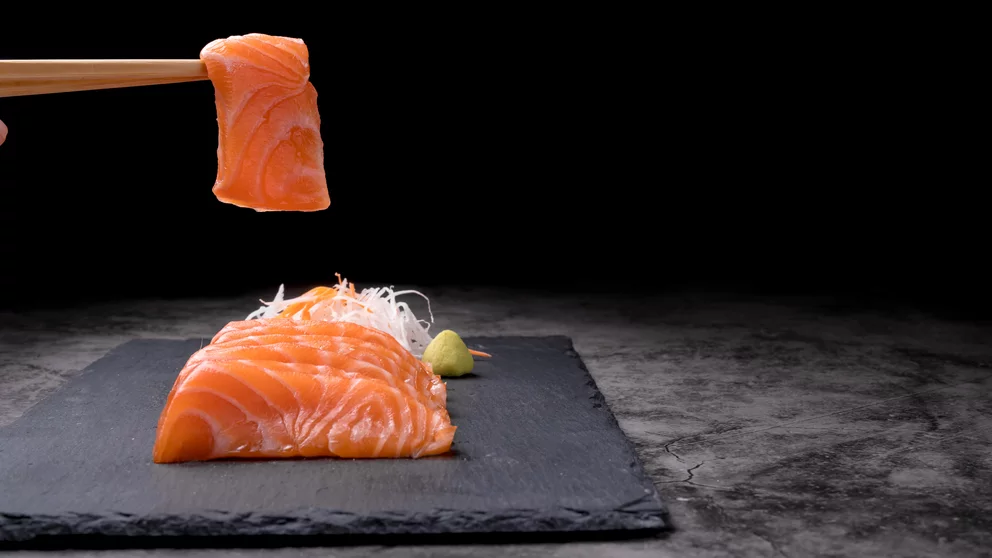
Technically not sushi, sashimi is thin slices of fish and seafood, often raw, served on its own without any rice. The fact it contains so few ingredients means there’s less of a chance for gluten-containing additions to sneak in, making it a good bet for coeliacs and those with non-coeliac gluten sensitivity. But be sure to check anything that might have been marinated beforehand as it may contain gluten-containing ingredients such as soy sauce.
Nigiri
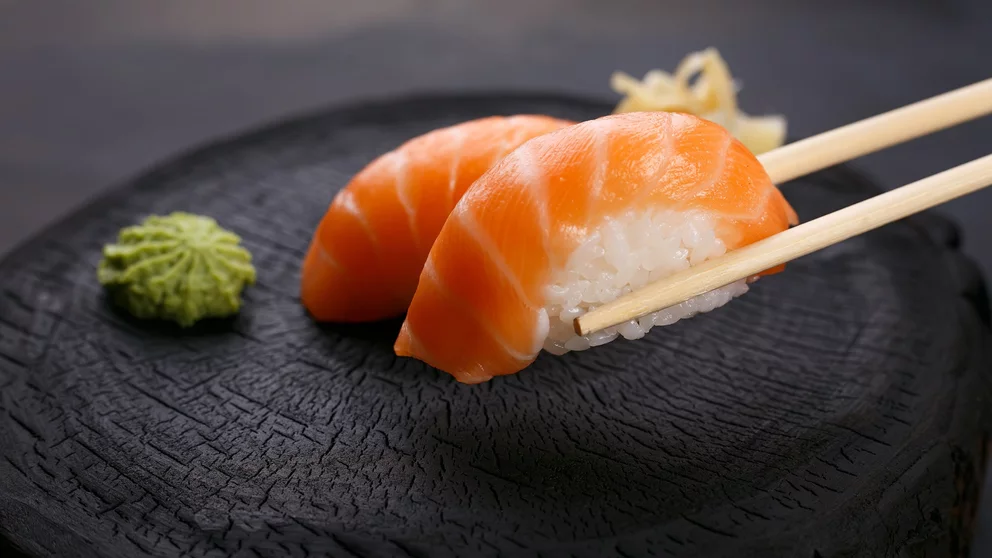
Somewhere between sushi and sashimi, nigiri are oblong blocks of moulded sushi rice topped with a simple slice of fish, seafood or other ingredient. Another fairly safe bet. But it is always best to check if anything has been marinated beforehand as it may contain gluten-containing ingredients such as soy sauce.
Chirashi
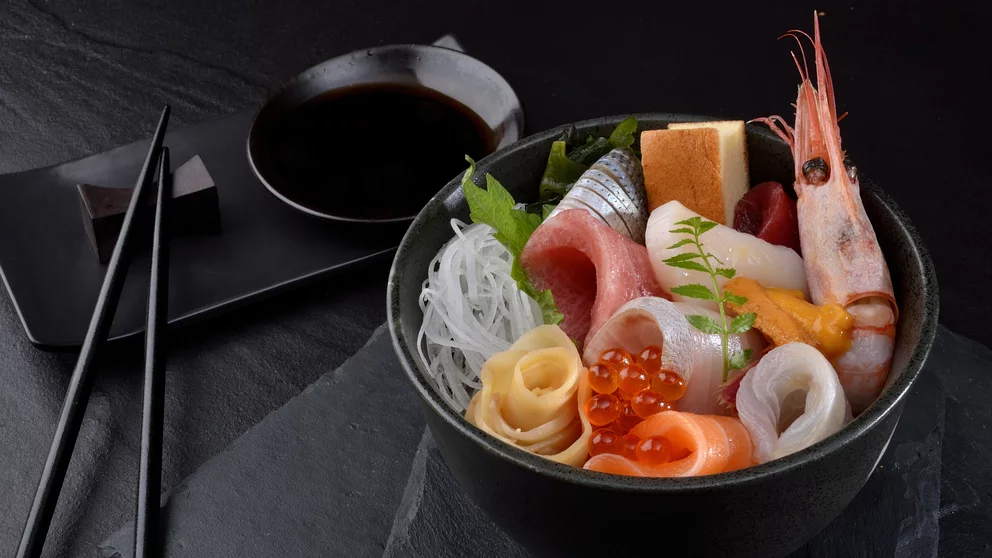
Chirashi means ‘scattered’ in Japanese and that sums it up well: a sushi bowl comprising a bed of sticky rice with a variety of ingredients – anything from raw fish, to omelette, nori seaweed and veggies – decoratively scattered over the top. Make sure you know what all the ingredients are and how it was prepared before taking a bite!
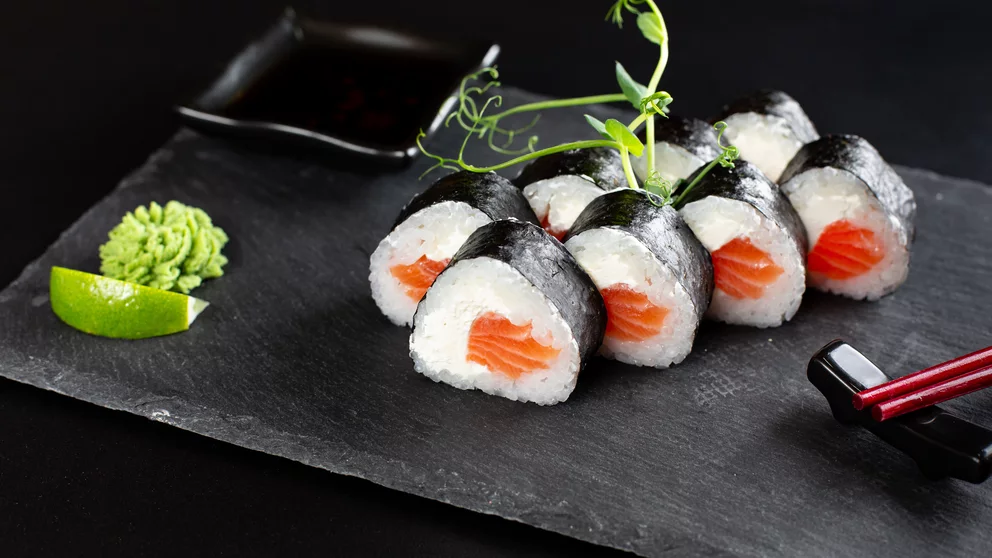
Maki
One of the main types of sushi rolls, maki comprise rice and a filling rolled up in a sheet of nori seaweed. Fillings can feature anything from fish and seafood to veggies, cream cheese and omelette, while the likes of sesame seeds, sriracha chilli sauce, tobiko (fish roe) and spicy mayo are often added on top. Again, make sure you know what all the ingredients are.

Uramaki
Similar to maki, except that here the sushi rice is stuck to the outside of the nori sheet and only the filling is rolled inside. Popular types include California rolls, spider rolls and dragon rolls, which often feature quite elaborate fillings and toppings – always be sure to check for any gluten-containing additions.
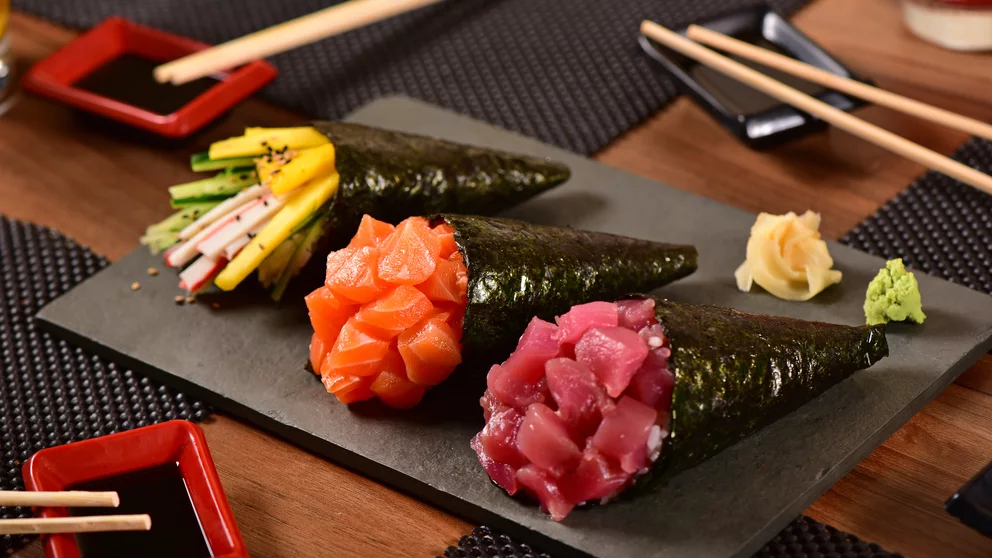
Temaki
Sushi cones – these larger sushi bites comprise a sheet of nori rolled into the shape of a cone with a filling inside. Again, check the ingredients.
Gluten-free ingredients
The main ingredients of sushi are all gluten-free, though it’s important to be aware of a few things.
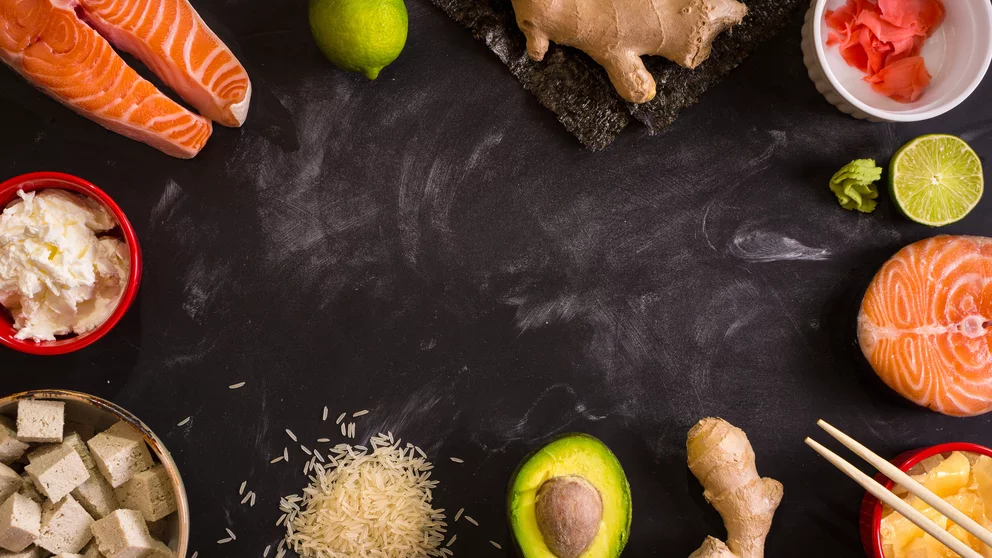
Sushi rice – Is sushi rice gluten free? Like all types of rice, the sticky Japanese type of rice for sushi is gluten free, assuming no cross contamination has occurred. The rice is usually flavoured with rice vinegar, sugar and salt, and these are also all gluten-free. That said, other types of vinegar are occasionally used that may not be (such as malt vinegar), so it’s a good idea to check the ingredients list or with the restaurant.
Fillings – Popular sushi fillings such as fish, seafood, vegetables, tofu, omelettes, and meat should all be gluten-free. Though be on the lookout for anything in a sauce or marinade, which may contain soy sauce or other gluten-containing ingredients.
Nori – Is seaweed gluten free? Yes! The nori sheets used to wrap sushi are gluten-free.
Wasabi – Pure wasabi is always gluten-free – though watch out for imitation versions (see below).
Pickled ginger – Often served alongside your sushi as a palate cleanser, this should also be gluten free.
Ingredients and toppings to avoid
Treat these sushi ingredients with a big question mark.
Soy sauce – Probably the biggest danger for sushi-loving coeliacs. Soy sauce is often served alongside sushi for dipping and is also used in marinades and sauces – including teriyaki, barbecue, ponzu and eel sauce. The problem is most varieties contain wheat. Be sure to opt for a certified gluten-free soy (which swaps the wheat for rice) or tamari sauce (made from 100% soybeans) and check the ingredients of any sauces and marinades.
Surimi – AKA imitation crab. This is crab meat that has been made into a paste then pressed into blocks and it usually contains wheat-containing starch. Be careful to check that any crab in your sushi is 100% meat – it often isn’t and restaurant staff may not always know the difference. Alternatively, simply avoid crab sushi altogether.
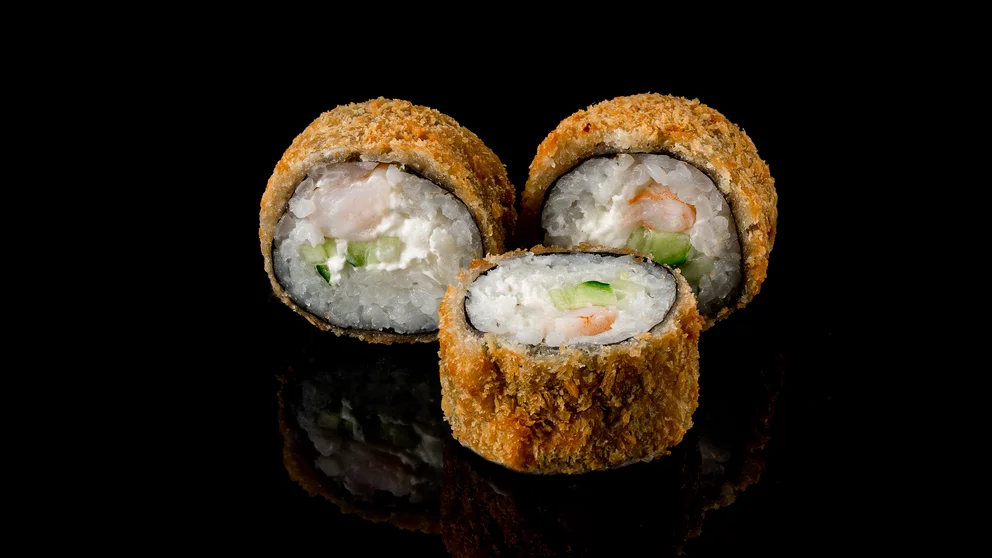
Tempura and breadcrumbs – A big no-no. Sushi ingredients fried in tempura batter or breadcrumbs usually contain wheat flour, so avoid anything that looks coated and fried
Imitation wasabi – Although pure wasabi is gluten free, not everyone uses it. Imitation versions made from horseradish and other ingredients can often contain gluten. Check with the restaurant whether the wasabi it serves is the real deal.
Cross-contact in sushi preparation
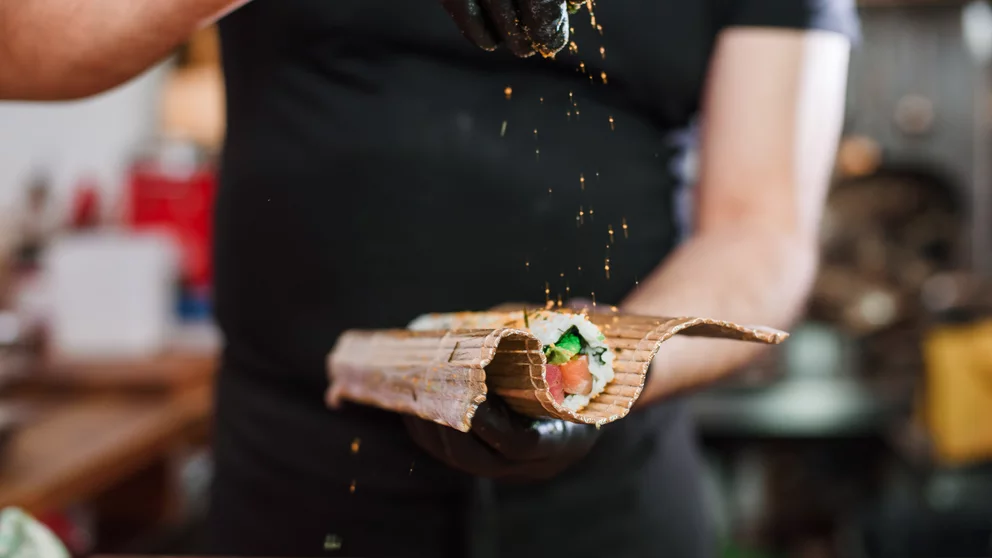
Whenever preparing sushi (or any other kind of food) for coeliacs, maintaining a clean area away from gluten-containing ingredients to avoid cross-contamination is vital. Take at look at this article for tips on maintaining a gluten-free kitchen at home.
If you’re at a sushi restaurant, make staff know that you’re allergic to gluten and that cross contamination is an important issue for you. If you can see a sushi maker preparing the sushi, look to see if they are changing knives, chopping boards and gloves in between preparing each sushi type. Make sure they know you cannot consume regular soy sauce, too.
Tips for making the perfect gluten-free sushi

There’s one foolproof way of ensuring your sushi doesn’t contains surimi, wheat-containing soy sauce or fake wasabi – make it yourself at home! That way you know exactly what’s in it. Doing so is easier than you might think and lots of fun to do with children. Get started by trying our brilliant gluten-free sushi burrito recipe, which features sushi rice and healthy veggies all wrapped up in a chunky nori roll.

